
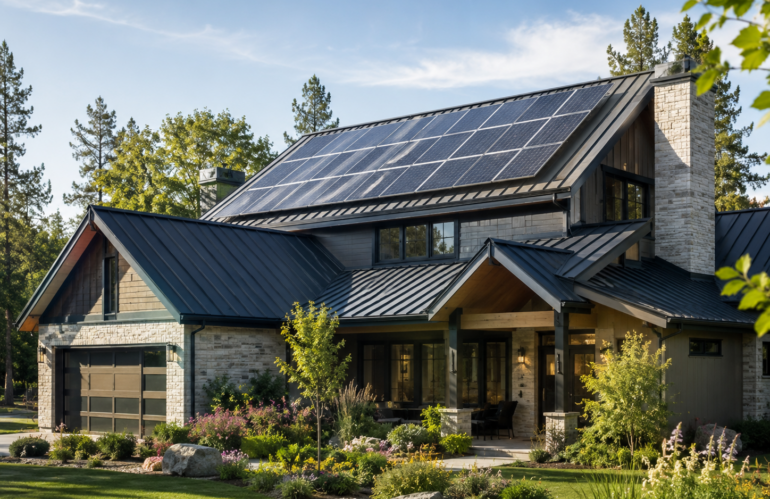
The United States tears off and dumps roughly 11 million tons of asphalt shingles into landfills every single year. Most of it is unavoidable: asphalt wears out, and when it does, there are few second uses. But the roofing industry has developed several durable, sustainable alternatives that last longer, perform better in extreme temperatures, and reduce environmental footprint over their full lifespan. If you are replacing a roof in the next year and looking beyond standard asphalt, here is what is actually worth considering.
What are the most common sustainable roofing options?
The most widely used sustainable roofing options include metal roofing (steel, aluminum, copper), TPO membranes for flat and low-slope roofs, recycled content shingles made from rubber or plastic, and solar-integrated roofing tiles. Each material has different upfront costs, expected lifespans, and environmental trade-offs worth understanding before you decide.
Why Sustainable Roofing Is Worth the Upfront Investment
The most eco-friendly roof is not always the one made from recycled content. It is the one you only install once. Sustainable roofing materials tend to last significantly longer than standard 3-tab asphalt shingles, which have an average lifespan of 20 to 25 years under typical conditions. Fewer tear-offs means less landfill waste, lower long-term cost per year, and less disruption to your household over the life of the home.
In Northern Utah, where temperatures swing from 100-degree summer days to sub-zero winter weeks, durability is not optional. Materials that handle thermal expansion, heavy UV exposure, and aggressive freeze-thaw cycling without degrading are inherently more sustainable, because they simply do not need early replacement. Our breakdown of metal vs. asphalt shingles covers how these two materials compare across Utah’s climate demands.
Top Eco-Friendly Roofing Materials for Utah Homes
Metal Roofing
Metal roofing is the strongest case for sustainability in residential applications. Steel and aluminum roofs typically last 40 to 70 years, contain 25 to 95 percent recycled content depending on the specific metal and manufacturer, and are 100 percent recyclable at the end of their service life. Metal reflects solar radiation rather than absorbing it, reducing cooling loads in summer by up to 25 percent according to the Metal Roofing Alliance. The upfront cost is roughly two to three times that of asphalt shingles, but the lifetime cost comparison often favors metal when you factor in the two or three asphalt replacements it would take to match a metal roof’s lifespan.
TPO Roofing
Thermoplastic Polyolefin (TPO) is the most widely used eco-friendly option for flat and low-slope roofs. TPO membranes are highly reflective, qualifying for ENERGY STAR certification in white and light-colored applications. They contain no chlorine, unlike PVC roofing membranes, which makes them cleaner to produce and dispose of. A well-installed TPO roofing system lasts 20 to 30 years on commercial and residential flat roofs and is competitively priced against other flat-roof alternatives.
Recycled Content Shingles
Shingles made from recycled rubber (often recovered from tires) or recycled plastic offer a mid-range option with lower environmental impact than virgin asphalt. Many products carry Class 4 impact resistance ratings, making them a smart choice in hail-prone areas like Northern Utah. Recycled rubber shingles can achieve the look of slate or wood shake at a fraction of the weight, and several national manufacturers now offer products with up to 90 percent post-consumer recycled content. Many Utah insurers offer premium discounts of 20 to 30 percent for Class 4 impact-resistant materials.
Solar-Integrated Roofing Tiles
Solar roofing tiles, integrated systems that replace conventional roofing material rather than mounting panels over it, represent the most ambitious sustainable option. The economics have improved significantly in recent years, though upfront costs remain high and product availability in smaller markets can be a limiting factor. For homeowners who want both energy generation and a durable roof, a traditional solar-panel-over-roofing system installed on a new metal or recycled shingle roof often delivers a better financial return than integrated tiles at current pricing.
How Sustainable Roofing Improves Energy Efficiency
Energy efficiency and sustainability overlap significantly in roofing. Cool-roof materials (metal, TPO, light-colored tile) reflect more solar heat and reduce attic temperatures, which directly lowers cooling costs during Utah summers. The EPA estimates that cool roofs can reduce peak cooling demand by 10 to 15 percent in hot climates.
Proper attic ventilation paired with any sustainable roofing material amplifies these benefits considerably. A new sustainable roof installed without addressing attic ventilation often underperforms its energy-efficiency potential. This is worth discussing with your contractor before installation begins, not after you get the first summer energy bill.
What to Consider Before Going Green on Your Roof
A few practical considerations for Northern Utah homeowners before committing to a sustainable material:
- Roof pitch: Most metal roofing works on pitches as low as 3:12; some standing seam systems can go lower. TPO is designed for flat and low-slope applications. Verify material compatibility with your specific pitch before purchasing.
- Snow and ice load: Utah roofs need to handle significant accumulation. Metal roofs shed snow efficiently; other materials may require additional structural review depending on your location’s snow load designation.
- HOA restrictions: Some homeowner associations have color or material restrictions. Verify before committing to metal or unconventional tile products.
- Contractor certification: Not every roofing contractor is certified to install all sustainable materials. Ask specifically about certifications and completed projects with the material you are considering.
Sustainable roofing is less about making a sacrifice and more about making a smarter long-term investment. The materials that last longest tend to perform best and carry the lowest environmental cost over their full life. If you are weighing eco-friendly roofing options for your Northern Utah home, Elite Services & Roofing can walk you through what works best for your roof’s pitch, your budget, and your climate. Request a free quote to get started.
Frequently Asked Questions
How much more does sustainable roofing cost compared to standard asphalt?
It depends on the material. Recycled content shingles typically cost 10 to 30 percent more than standard asphalt. Metal roofing costs two to three times more upfront but lasts two to three times longer. TPO for flat roofs is often competitively priced against modified bitumen alternatives. In all three cases, the lifetime cost per year of service generally favors the sustainable option.
Is metal roofing loud during rain or hail?
Residential metal roofing installed over solid decking with proper underlayment is generally no louder than asphalt shingles. The loud “tin roof in a rainstorm” experience is common on agricultural buildings with no insulation or decking beneath the panels. A residential installation with standard underlayment and decking effectively dampens sound.