
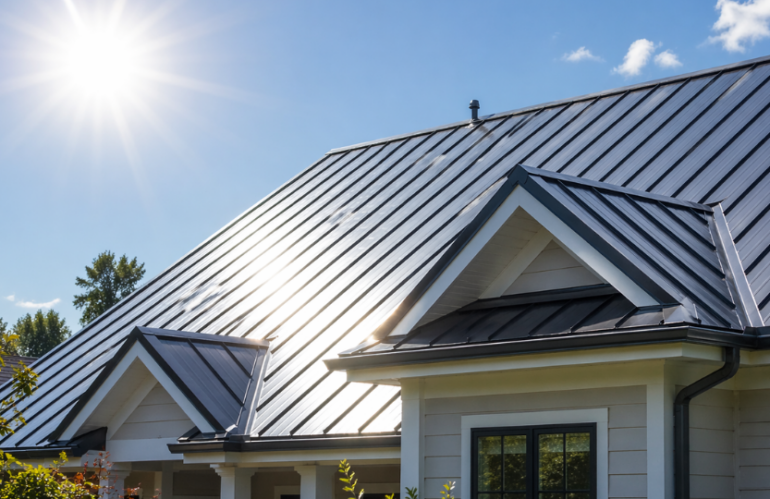
There’s a common misconception that metal roofs trap heat and make homes warmer. In reality, understanding if metal roofs make your house hotter requires looking at how different roofing materials interact with sunlight and heat.
When evaluating roofing options, understanding does a metal roof make your house hotter becomes especially important in warmer climates. The answer depends less on the material itself and more on how it reflects and manages heat compared to other roofing systems.
Do Metal Roofs Make Your House Hotter? The Short Answer
No, metal roofs do not make your house hotter. In fact, when properly installed, they can help regulate temperature more effectively than many traditional roofing materials.
Rather than trapping heat, metal roofing systems are designed to reduce heat transfer into the home. Their performance depends on factors such as surface finish, installation quality, and how well the overall roofing system works with insulation and ventilation.
This means that instead of increasing indoor temperatures, a well-designed metal roof can contribute to a more stable and comfortable environment, especially during periods of prolonged sun exposure.
How Metal Roofs Interact with Heat
To better understand performance, it helps to look at how roofing materials respond to sunlight. When sunlight hits a roof, it can be reflected, absorbed, or transferred into the home.
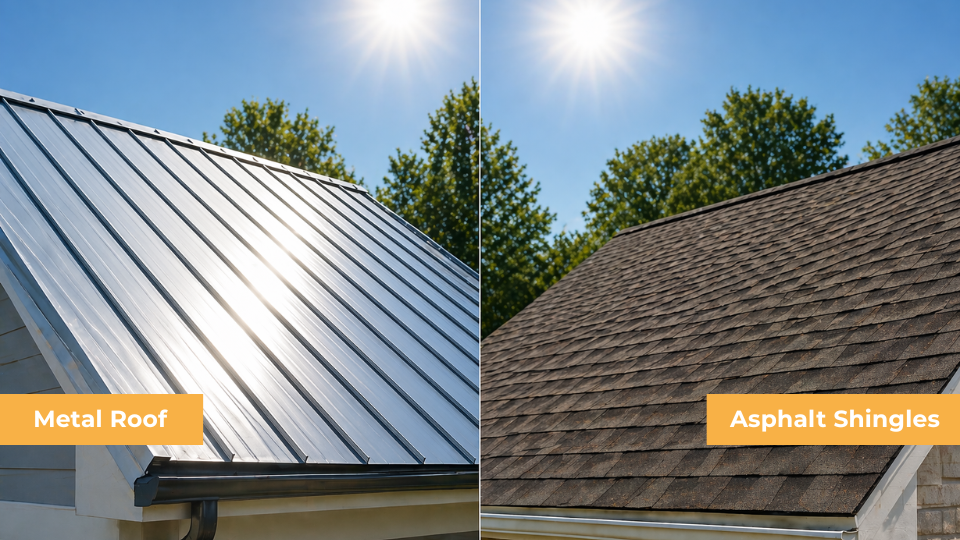
Metal roofs are highly effective at reflecting sunlight, which is why discussions around do metal roofs reflect heat are so important. Instead of storing heat like asphalt shingles, metal surfaces reflect much of it away from the structure.
There is also a misconception that metal roofs attract heat, but this is not accurate. Metal does not attract heat, it responds to it differently. Because of its surface properties, it absorbs less heat and releases it more quickly than many traditional materials.
Why Metal Roofs Stay Cooler (And How Color Affects Performance)
Metal roofs are designed to manage heat efficiently, which is one of the reasons they are often considered energy efficient.
Key factors include:
- High solar reflectivity, which reduces heat absorption
- Thermal emissivity, allowing heat to dissipate quickly
- Reflective coatings that enhance cooling performance
- Lighter-colored metal roofs reflect more sunlight, helping reduce surface heat buildup
- Darker colors tend to absorb more heat, but modern coatings and finishes can significantly reduce this effect
When considering how much extra heat for a darker color metal roof, it’s important to note that modern finishes significantly minimize this effect. Even darker metal roofs often perform better than traditional materials due to their reflective properties.
Are Metal Roofs Cooler Than Shingles?
When comparing roofing materials, metal roofs typically perform better at managing heat. In most cases, they help reduce heat buildup more effectively than traditional asphalt shingles.
Asphalt shingles tend to absorb and retain heat, which can increase attic temperatures and affect indoor comfort. Metal roofs, on the other hand, reflect heat and release it quickly, helping maintain a more stable temperature.
For a deeper look at how these materials compare, explore this metal vs shingle roof comparison.
What Actually Makes a House Hotter (It’s Not Just the Roof)
While roofing material plays a role, it’s not the only factor that affects indoor temperature.
A home can feel hotter due to:
- Poor insulation in the attic
- Inadequate ventilation
- Heat buildup in enclosed spaces
- Improper installation of roofing systems
Even the most efficient roof will not perform well without proper insulation and airflow. These elements work together to regulate temperature and improve overall comfort.
Are Metal Roofs a Good Choice for Energy Efficiency?
Metal roofs are widely recognized for their energy efficiency benefits. By reflecting heat and reducing thermal transfer, they can help lower cooling demands during warmer months.
Benefits include:
- Reduced energy costs for cooling
- Improved indoor comfort
- Less strain on HVAC systems
- Long-term performance and durability
Homeowners considering metal roofing solutions often find that these systems provide both performance and long-term value. There are also various options available, and exploring different types of metal roofing can help you choose the best fit for your home.
Get Expert Guidance on Choosing the Right Roof
Metal roofs do not make your home hotter. In fact, they are designed to improve energy efficiency and indoor comfort when properly installed.
If you’re considering a metal roof or want to better understand your options, Elite Services & Roofing provides expert guidance and professional recommendations tailored to your home. Serving homeowners across Utah, our team is here to help you choose the right solution for your needs. Contact us today to schedule a consultation and get started.