
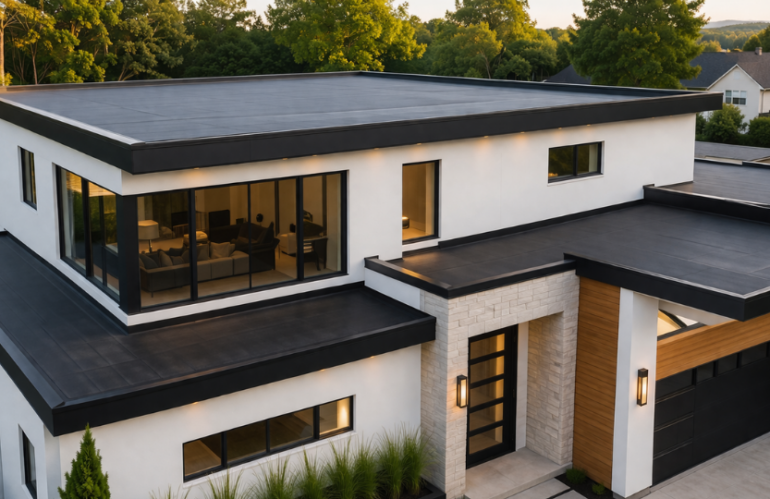
Flat roofs are a popular option in modern construction, offering a clean aesthetic and practical benefits for both residential and commercial properties. When evaluating flat roofs, it’s important to understand how they perform, what they offer, and where they may present challenges.
Taking a closer look at the advantages and disadvantages of flat roof can help homeowners make a more informed decision based on their property, climate, and long-term goals.
What Are Flat Roofs?
Flat roofs are roofing systems with a very low slope, designed to create a nearly level surface. Unlike traditional pitched roofs, they do not have a steep angle, which gives them a clean, modern appearance and allows for more usable space.
Although they appear flat, these roofs are built with a slight slope to allow water to drain properly and prevent pooling. This subtle pitch is essential for maintaining the integrity and performance of the roofing system over time.
They are commonly found in contemporary homes, home additions, and structures where maximizing usable space is a priority. Flat roofs are typically constructed using materials such as TPO, EPDM, or modified bitumen, which create a durable, waterproof barrier when properly installed and maintained.
Flat Roof Advantages and Disadvantages
Evaluating the flat roof pros and cons in real-world conditions can help clarify whether this option is right for your home.
Advantages of Flat Roofs
Flat roofs offer several practical benefits that make them appealing for homeowners:
- Lower installation costs due to fewer materials and simpler construction
- Usable rooftop space for HVAC systems, solar panels, or outdoor areas
- Easier access for inspections, repairs, and maintenance
- A clean, modern appearance that complements contemporary home designs
These benefits of a flat roof can make it an efficient and functional solution, especially for homes designed with modern architecture in mind.
Disadvantages of Flat Roofs
Despite their advantages, flat roofs also come with considerations that homeowners should not overlook:
- Drainage challenges that can lead to water pooling if not properly managed
- Higher maintenance needs compared to sloped roofs
- Increased risk of leaks due to slower water runoff
- Shorter lifespan depending on the material and installation quality
While these factors may raise concerns, they are manageable with proper design, installation, and ongoing care.
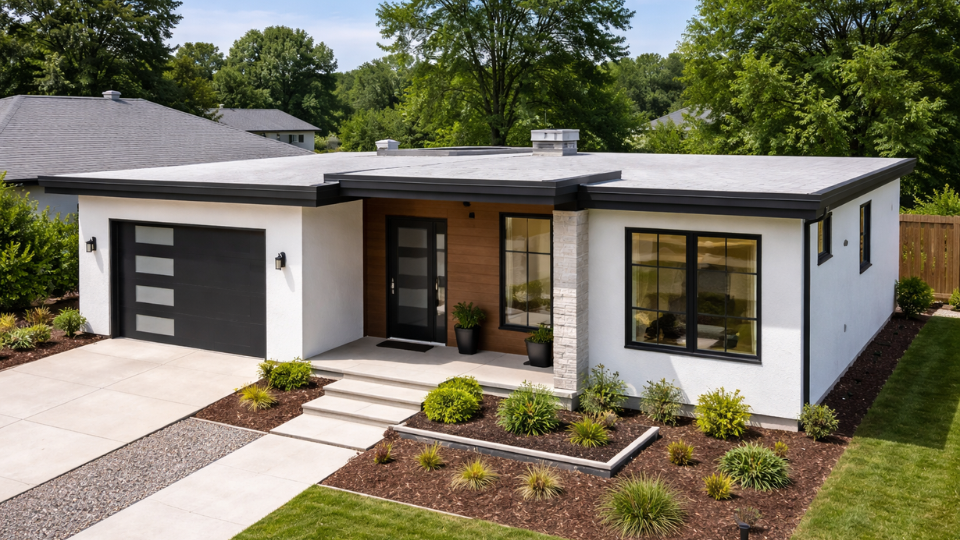
Are Flat Roofs a Good Option for Homes?
There is a common perception that flat roofs are bad for residential properties, but this is not necessarily the case. Flat roofs can perform very well when installed correctly and maintained properly.
Their success depends on several factors, including climate, drainage systems, and the quality of materials used. In areas with heavy rainfall or snow, proper drainage design becomes especially important. When these elements are addressed, flat roofs can be a reliable and long-lasting option.
For homeowners seeking a modern look or additional usable space, flat roofs can offer both functional and aesthetic advantages.
Key Factors to Consider Before Choosing a Flat Roof
Before deciding on a flat roof, it’s important to evaluate how it will perform over time.
Some key considerations include:
- Climate conditions and how they affect drainage and material performance
- The quality of installation, which plays a major role in preventing leaks
- The type of roofing material used and its expected lifespan
- Your willingness to perform regular inspections and maintenance
Making an informed decision at this stage can help avoid costly repairs and ensure long-term performance.
How to Maintain a Flat Roof for Long-Term Performance
Maintenance is a critical part of keeping flat roofs in good condition. Because water does not drain as quickly as it does on sloped roofs, regular upkeep is essential.
Recommended maintenance practices include:
- Scheduling routine inspections to identify early signs of wear
- Removing debris that may block drainage systems
- Checking for standing water after heavy rain
- Addressing small issues before they develop into larger problems
Consistent maintenance helps extend the life of the roof and reduces the likelihood of unexpected repairs.
Get Expert Guidance for Your Roofing Project
Flat roofs can be a practical and modern solution when designed and maintained correctly. Understanding their strengths and limitations allows homeowners to make confident decisions based on their specific needs.
If you’re considering a flat roof for your home, Elite Services & Roofing provides expert guidance and professional roofing solutions across Utah. Contact us today to schedule an inspection and get personalized recommendations for your property.