
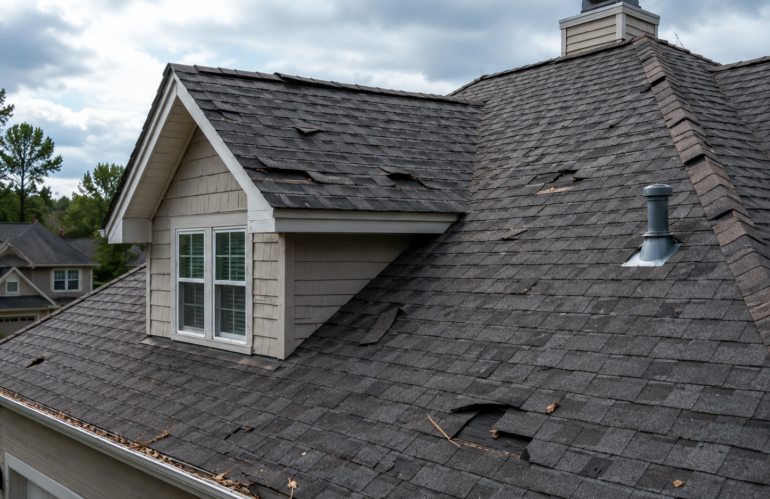
The shingles you can see from the driveway are not the ones you need to worry about.
A missing shingle is obvious — you will spot it, file a claim, and get it replaced. The damage that costs homeowners the most is the kind that looks fine from the ground: shingles that lifted in a gust and reseated, shingles with broken seals that now funnel water underneath them, flashing that shifted a quarter inch. That damage is invisible until the next rain.
If your area recently had high winds, here is how to diagnose what actually happened to your roof, what repairs look like, and how to move before the damage compounds.
What are the signs of wind damage to a roof?
Signs of wind damage to a roof include missing shingles, lifted or curled shingle edges, heavy granule loss in gutters, displaced ridge cap shingles, and shifted flashing around chimneys or vents. The most costly damage — broken sealant strips and lifted nails — is invisible from the ground and requires an on-roof inspection to diagnose.
What Wind Actually Does to a Roof
Wind does not simply rip shingles off. At moderate speeds — 45 to 60 mph, the kind a typical thunderstorm produces — the real mechanism is uplift and pressure cycling. Wind gets under shingle edges, flexes them up and down repeatedly, and breaks the sealant strip that bonds each shingle to the one below it. The shingle goes back down. Everything looks fine. The seal does not.
Once that sealant strip breaks, the shingle becomes a flap rather than a sealed layer. Water runs underneath it on the next rain, saturates the underlayment, and begins working on the decking. This can happen at wind speeds well below the threshold that visibly damages a roof.
At higher speeds — 60 mph and above — you will see the obvious damage: missing shingles, torn flashing, and sometimes structural stress to the decking itself.
Signs of Wind Damage to Your Roof
What You Can Spot From the Ground
Walk the perimeter of your home after a windstorm and look for:
- Missing shingles — bare patches of dark underlayment or decking visible from street level
- Lifted or curled shingle edges — corners or edges that are no longer lying flat; if you can see daylight under shingle edges on a low slope, the seal is broken
- Granule loss — check the gutters and downspout splash zones for a sandlike accumulation of dark granules; heavy granule shedding means the shingles took impact or severe flex stress
- Damaged ridge cap — the cap shingles along the peak are exposed to the highest wind speeds and are typically the first to go
- Flashing displacement — if metal flashing around your chimney, vents, or skylights has shifted, pulled away, or wrinkled, it is a water entry point even if the shingles look intact
What You Cannot See From the Ground
This is the category that matters most. Broken sealant strips, lifted nails, hairline cracks in the shingle surface, and compromised underlayment around penetrations are invisible at ground level. A post-storm roof inspection by a trained eye — on the surface, not just from the yard — is the only way to diagnose them.
The gap between “looks fine” and “is fine” is where most post-storm water damage starts.
What to Do After a Windstorm
Step 1: Document Before Anything Else
Before any repairs are made, photograph everything — the roof from the ground, any visible exterior damage, and any interior signs (ceiling stains, wet insulation in the attic, water around light fixtures). This documentation supports an insurance claim if the damage meets your deductible threshold.
Step 2: Schedule a Professional Inspection
A post-storm roof inspection from a licensed roofer serves two purposes: it identifies damage you cannot see from the ground, and it generates a written assessment your insurance company can use to process a claim. Many homeowners skip this step if the roof looks okay and pay out of pocket months later when a small, missed problem becomes a leak.
Elite Services and Roofing offers free post-storm inspections — no obligation, no pressure to commit to repairs. The goal is to give you accurate information.
Step 3: Understand Your Repair Options
Wind damage repairs fall into a few categories depending on severity:
- Spot shingle replacement addresses missing or visibly broken shingles. This is straightforward when the decking beneath them is intact and the damage is localized.
- Re-sealing and re-nailing addresses shingles that lifted and reseated but lost their bond. A roofer applies new sealant, re-nails where needed, and restores the waterproofing layer without replacing the shingle.
- Flashing repair or replacement addresses metal that shifted, corroded, or pulled away from a penetration — a common source of post-storm leaks that gets misdiagnosed as a shingle problem.
- Partial or full replacement becomes the conversation when the decking is compromised, damage is widespread, or the roof is already near the end of its lifespan.
Step 4: Check Your Homeowner’s Insurance Policy
Most standard homeowner’s insurance policies cover wind damage as a named peril. Coverage specifics — your deductible, whether you have ACV (actual cash value) or RCV (replacement cost value) coverage — vary by policy and state. A written inspection report from a roofing contractor strengthens your claim and gives the adjuster something concrete to evaluate.
When to Act Immediately vs. When You Can Wait
Act the same day if you have:
- A missing shingle over an area that will see rain in the next 24 to 48 hours
- Any visible decking exposure
- Active water intrusion inside the home
Schedule within the week if you have:
- Granule loss or lifted edges with no current rain in the forecast
- Ridge cap damage that is contained
- Suspected broken seals with no visible interior water
Get a professional opinion before deciding if the roof looks fine from the ground but you had significant wind. This is the most common situation that ends badly.
The Bottom Line
Wind damage to a roof is rarely all-or-nothing. The most expensive outcomes are not from dramatic damage — they are from subtle damage that gets ignored for a season. A single lifted shingle with a broken seal, left alone through a wet fall, can mean $3,000 in decking replacement instead of a $200 spot repair.
If your roof took any wind recently, request a free inspection from Elite Services and Roofing. We will tell you what the storm actually did — from on the roof, not from your driveway — and give you a straight answer on what, if anything, needs to happen next.
Frequently Asked Questions
Does wind damage require a full roof replacement?
Not usually. Most wind damage is localized — missing shingles, broken seals, or displaced flashing — and is addressed with targeted repairs. Full replacement becomes necessary when structural decking is compromised, damage is widespread, or the roof was already approaching the end of its lifespan.
Will my homeowner’s insurance cover wind damage to my roof?
Most standard policies include wind damage as a covered peril. Coverage depends on your deductible and whether your policy pays actual cash value or replacement cost. A written inspection report from a licensed roofer is the most important thing you can bring to a claim.