
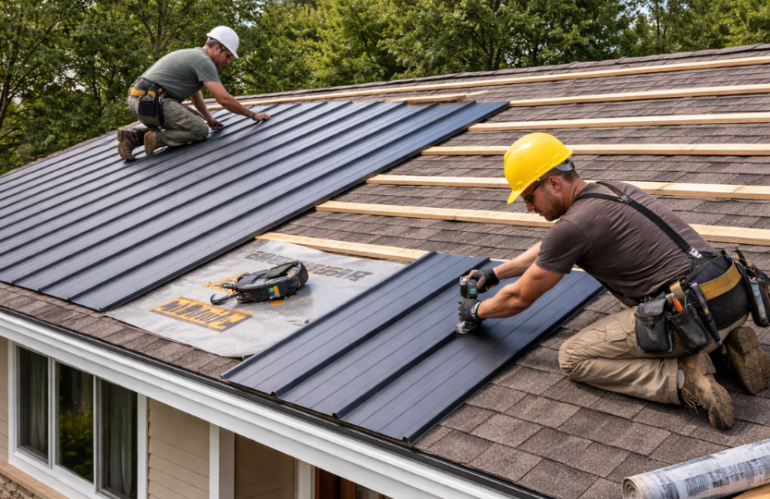
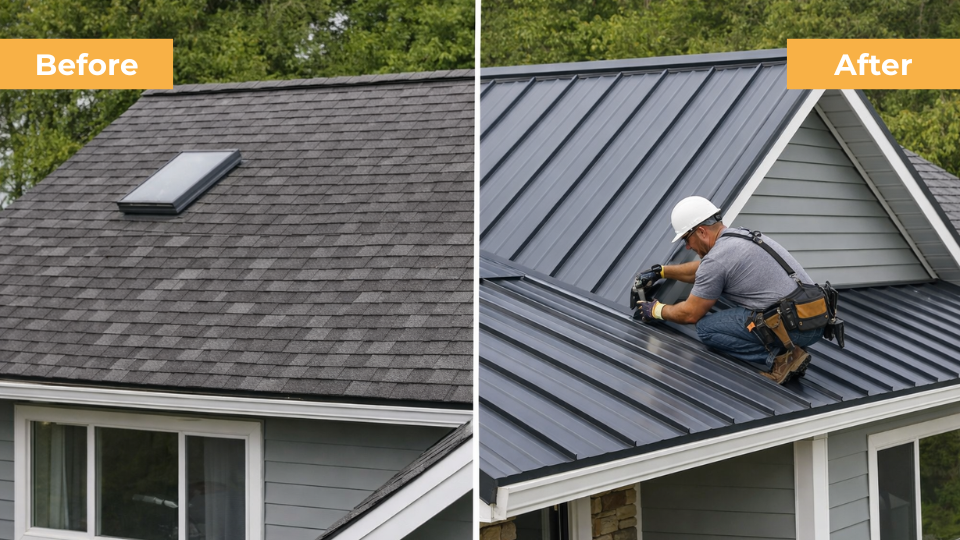
Installing a metal roof over shingles is a common option homeowners consider when upgrading to a metal roofing system without the time and cost of a full tear-off. In many cases, this approach is possible, but it depends on the condition of the existing roof, local building codes, and how the new system is installed.
Before moving forward, it’s important to understand when this method works, what risks to watch for, and how it can impact long-term performance.
Can You Put a Metal Roof Over Shingles?
In many cases, can you install metal roof over shingles has a simple answer: yes. A metal roof can often be installed over existing shingles without a full tear-off, as long as the roof is in good condition and structurally sound.
However, not every roof qualifies. The surface must be relatively even and able to support the additional weight, making a professional inspection essential. If your current shingles are still performing well, maintaining or upgrading an asphalt roofing system may also be worth considering.
What Building Codes and Structural Requirements Say
Before deciding if you can lay metal roofing over shingles applies to your home, it’s important to consider local building codes and structural limitations.
Most codes allow up to two roofing layers, meaning a metal roof can typically be installed over one layer of shingles, but not multiple layers. The roof deck must also be in good condition, with no sagging, moisture damage, or rot before installation.
How Installing a Metal Roof Over Shingles Works
The process of installing a metal roof over shingles requires proper preparation to ensure durability and performance.
Direct-to-Shingle Installation
In some cases, metal panels can be installed directly over shingles. This method is less common and usually only suitable when the existing surface is flat and in good condition.
Furring Strips (Best Practice)
A more reliable approach involves installing furring strips (wood battens) over the shingles to create a level surface, improve ventilation, and help extend the lifespan of the metal roof.
Underlayment and Moisture Protection
A synthetic underlayment is often added between the shingles and the metal panels to provide an additional barrier against moisture and reduce the risk of condensation.
Benefits of Installing a Metal Roof Over Shingles
One of the main advantages of this approach is efficiency, both in time and cost. Skipping the tear-off process simplifies the project and reduces disruption.
Key benefits include:
- Lower upfront costs due to reduced labor and disposal
- Faster installation timeline
- Less mess and minimal disruption to your home
- Added sound and thermal buffering from the existing shingles
For homeowners comparing materials, understanding how metal roofing compares to traditional shingles in durability and lifespan can also help clarify whether this upgrade aligns with long-term goals.
Potential Drawbacks and Risks to Consider
While this method can be effective, it’s important to be aware of the potential downsides.
Some of the most common concerns include:
- Hidden damage beneath existing shingles, such as rot or soft decking, may only be identified through shingle removal before a new system is installed.
- Uneven surfaces that can affect the appearance and fit of metal panels
- Ventilation challenges that may trap heat or moisture
- Possible limitations on manufacturer warranties
In some cases, these risks make a full roof replacement a more reliable option depending on the condition of the existing roof.
When You Should Not Install a Metal Roof Over Shingles
There are situations where installing a metal roof over shingles is not recommended.
Avoid this approach if:
- Your roof already has multiple layers of shingles
- There are signs of structural damage or sagging
- Moisture issues, leaks, or mold are present
- Local building codes require a tear-off
Addressing these issues first is essential to avoid long-term problems.
Is It Better to Remove Shingles Before Installing Metal Roofing?
Removing the existing shingles often provides the best foundation for a new metal roof. A full tear-off allows for a complete inspection of the roof deck and ensures that any hidden issues are properly addressed. In many cases, this involves a full shingle removal process to properly evaluate the structure before installation.
Although this option involves a higher upfront cost, it typically results in better performance and fewer repairs over time. For homeowners planning to stay in their home long-term, it can offer greater value and peace of mind.
How Long Does a Metal Roof Last Over Shingles?
A properly installed metal roof can last between 40 and 70 years. However, its lifespan depends on several factors, including ventilation, installation quality, and the condition of the underlying structure.
When installed over shingles, ensuring proper airflow and support is especially important to achieve long-term durability.
Get Expert Guidance Before Making Your Decision
Installing a metal roof over shingles can be a practical solution when the existing roof is in good condition and properly evaluated. So, is it ok to install metal roof over shingles? In many cases, yes, but only when structural integrity, ventilation, and installation methods are carefully considered to support long-term performance.
If you’re considering upgrading your roof, Elite Services & Roofing provides expert evaluations and high-quality roofing solutions across Utah. Contact us today to schedule an inspection and get clear guidance on the best option for your home.