
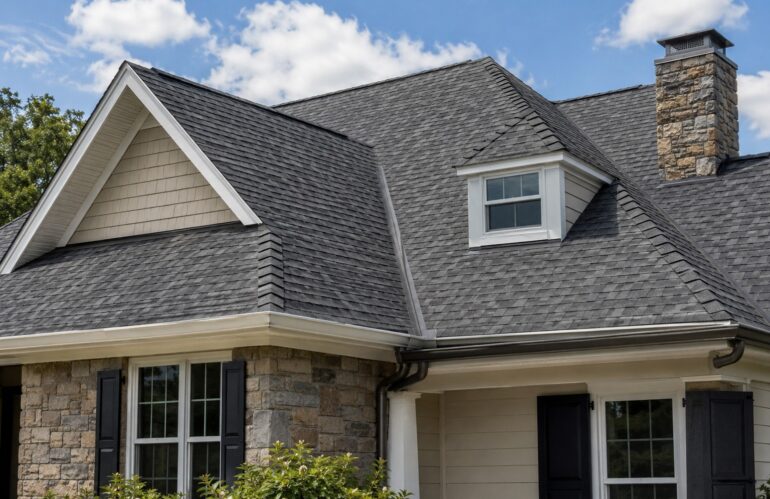
Ask how often do roofs need to be replaced and almost every answer you find online is the same single number: twenty years, give or take. That number comes from national averages built on mild, low elevation climates, and it is one of the reasons northern Utah homeowners get blindsided. A roof in Weber, Davis, or Summit County works considerably harder than a roof in Ohio. It sits thousands of feet closer to the sun, carries months of snow load, and expands and contracts through freeze and thaw cycles that can run for days at a time. This guide gives you the real service life by material, explains what our climate does to it, and shows you how to judge your own roof by condition instead of by birthday.
QUICK ANSWER
Most asphalt shingle roofs need replacing every 20 to 25 years, though roofs in northern Utah often age faster due to intense UV exposure at altitude, heavy snow load, and freeze-thaw cycling. Metal roofs last 40 to 70 years. Replace sooner if you see curling shingles, bald granule patches, or daylight in the attic.
Roof lifespan by material, and what those numbers really mean
Manufacturer lifespan ratings are laboratory numbers. They assume correct installation, adequate attic ventilation, and average weather. Treat the ranges below as a starting point, then adjust downward for elevation, pitch, and how much direct afternoon sun the roof takes.
- Three-tab asphalt shingles: 15 to 20 years. The thinnest and cheapest option, and the one that suffers most here. A single layer of mat and granules has very little reserve when UV and hail start working on it. Most three-tab roofs we replace in Ogden and Roy are failing at year 14 to 17, not year 20.
- Architectural (dimensional) asphalt shingles: 22 to 30 years. Two laminated layers, heavier mat, better wind rating. This is the default residential choice across the Wasatch Front and the one most homeowners should price out. Expect the low end of the range on a south or west facing slope.
- Standing seam metal: 40 to 70 years. Concealed fasteners, no exposed gaskets, and it sheds snow rather than holding it. The longest practical service life available on a residential roof, and worth comparing directly against shingles before you commit. Our metal roofing page walks through the systems we install.
- TPO and other single-ply membranes: 20 to 30 years. The standard for flat and low-slope sections, including the porch and addition roofs common on Utah ranchers. Lifespan here depends far more on seam quality and drainage than on the membrane itself. If you are new to the material, start with our primer on what TPO roofing is.
Why Wasatch Front conditions compress every one of those numbers
Four local forces do the damage, and they compound. A roof that would comfortably reach year 25 in a temperate climate frequently gives out three to six years early here.
- Altitude and UV. At 4,300 feet and up, ultraviolet intensity is roughly 20 percent higher than at sea level. UV cooks the asphalt binder that holds granules in place. Once granules go, the mat is exposed and degradation accelerates fast.
- Snow load and meltwater. Snow sits on a roof for weeks, then melts, then refreezes at the eaves. That cycle forces water backward under shingle courses in a way rain never does.
- Freeze and thaw. Northern Utah routinely swings across freezing multiple times in a 24 hour period through late winter. Every cycle expands and contracts the deck and the fasteners holding your roof to it.
- Canyon wind. East winds off the Wasatch regularly hit 60 to 80 miles per hour along the Ogden bench. Sustained uplift breaks shingle seals long before it tears anything off, and a broken seal is an invisible countdown to a leak.
This is also why installation quality matters more here than almost anywhere else. Correct nailing pattern, ice and water shield at the eaves, and balanced attic ventilation are the difference between the top and bottom of every range above. You can see how we handle those details on our roof installation and repair page.
The seven visible signs your roof needs replacing, ranked by urgency
Work down this list from your driveway and, where safe, from inside the attic. You do not need to get on the roof to make a reasonable judgment.
- Daylight through the attic roof deck. Stop reading and call someone. Visible light means an open path for water, and the deck below is already compromised.
- Sagging along a ridge or between rafters. A dip or wave in the roof plane points to saturated or rotted decking, and occasionally to structural load. This is not a repair item.
- Active or recurring interior stains. Brown rings on a ceiling that grow after every storm mean water is already inside the assembly. Even if the roof looks fine from outside, flashing or underlayment has failed.
- Bald patches where granules are gone. Dark, smooth areas on shingles mean the protective layer is stripped and UV is hitting the mat directly. Widespread bald patches put a roof within a couple of years of the end.
- Curling, cupping, or clawing shingle edges. Edges that lift or bowl are drying out and losing flexibility. Curled shingles catch wind and let water track sideways.
- Granules collecting in gutters and downspout splash blocks. A handful after a new install is normal shedding. Cups of grit years later is the roof measurably wearing out.
- Cracked, rusted, or lifting flashing. Most leaks start at penetrations, not in the field of the shingles. If you are not sure what you are looking at, our explainer on roofing flashing covers where it lives and how it fails.
Why a twenty year old roof may still be perfectly fine
Age is a prompt to look, not a verdict. We regularly inspect 22 and 23 year old architectural roofs on north facing slopes that still have flexible shingles, intact seals, and full granule coverage. We also regularly condemn 14 year old three-tab roofs on a west facing gable that took two decades of afternoon sun in half the time.
The variables that decide which one you have:
- Orientation. South and west slopes take the UV beating. It is common for one plane of a roof to be finished while another has years left, which is why an honest inspection reports slope by slope.
- Attic ventilation. An under-ventilated attic bakes shingles from underneath and can cut service life by a quarter. If your upstairs is stifling in July, that is a clue. Our guide to roof vent types explains what balanced intake and exhaust should look like.
- Storm history. One severe hail event can retire a five year old roof. Age becomes irrelevant the moment impact damage enters the picture.
- Layer count. A second layer installed over the first traps heat and hides deck problems. Two-layer roofs consistently underperform their rating.
If you have no idea when your roof went on, that is normal and it is solvable. Permit records, real estate listings, and the wear pattern itself all tell the story. We wrote a full walkthrough on how to figure out how old your roof is.
When a repair is the right call instead
Replacement is not always the answer, and any contractor who says otherwise on a first visit is selling rather than assessing. Repair is usually the better economics when:
- The damage is isolated to one slope, one valley, or a few penetrations.
- The roof is under roughly 60 percent of its expected service life.
- Granule coverage across the rest of the roof is still even and full.
- The failure is at flashing, a vent boot, or a pipe collar rather than in the shingle field.
Replacement is the better call when repairs are becoming routine, when a matching shingle no longer exists, when there are already two layers on the deck, or when you are inside the last few years of the range and planning to stay in the house. If the number is the obstacle rather than the decision, our financing options page lays out what monthly payment ranges actually look like.
Get a straight answer about where your roof stands
The useful output of an inspection is not a quote. It is a photo documented condition report that tells you which slopes are worn, what is failing first, and roughly how many seasons you have left to plan around. That report is worth having whether you replace this year or in five. We inspect throughout Weber, Davis, Morgan, and Summit counties, and you can see the full list on our service areas page.
Request a Free Roof Age and Condition Assessment
Frequently Asked Questions
How often should a roof be replaced in Utah?
Plan on 15 to 20 years for three-tab asphalt, 22 to 30 for architectural asphalt, and 40 to 70 for standing seam metal. Northern Utah roofs typically land at the lower end of each range because of altitude UV, snow load, and freeze-thaw cycling.
How do I tell if my roof needs replacing without climbing on it?
Look for curling or clawing shingle edges, dark bald patches where granules are missing, granule buildup in gutters, and any sag in the roof plane. From inside the attic, look for daylight, damp decking, or water staining on the rafters.
How long do asphalt shingles last?
Three-tab shingles generally last 15 to 20 years and architectural shingles 22 to 30. Direct afternoon sun, poor attic ventilation, and a second layer over the original all pull those numbers down noticeably.
Is it worth replacing a roof before it leaks?
Usually yes, if the roof is near the end of its range. Replacing on your schedule avoids emergency pricing, protects the decking and insulation underneath, and lets you book outside of the fall rush when crews are tightest.
Does a new roof help when I sell the house?
It removes the single most common inspection objection and the single most common price negotiation lever in a northern Utah sale. Buyers and their insurers both ask about roof age early, and a documented recent replacement shortens that conversation.