
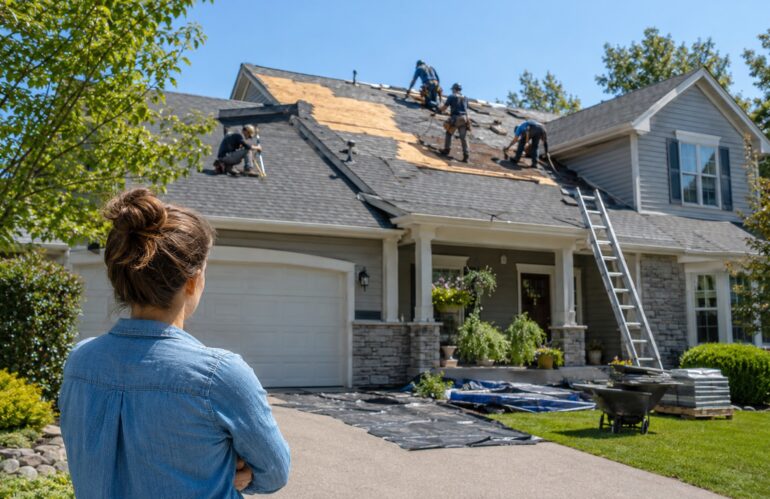
Should I stay home during roof replacement is one of those questions homeowners feel slightly silly asking the person selling them the roof, so most people never ask it and just guess. It is a completely reasonable question. A crew of six will be on your house for eight to ten hours, the noise is significant, and your driveway is out of commission. Here is the plain answer, plus everything worth doing the night before so install day feels like a scheduled inconvenience instead of a surprise.
QUICK ANSWER
You do not need to stay home during a roof replacement, though many homeowners choose to be there when the crew arrives on day one. Plan to move vehicles out of the driveway, keep pets and small children indoors or off site, and expect steady hammering through most of the working day.
What the crew needs from you before day one
None of this requires you to be present. It just needs to be done before the truck arrives, ideally the night before.
- Clear the driveway completely. The dumpster and the material truck both need it, and stray nails end up there before final cleanup. Park on the street or at a neighbor’s.
- Unlock gates and clear the perimeter. Ladders move around the entire house all day. Give the crew a four foot working path along every wall.
- Move patio furniture, grills, and potted plants. Anything within about ten feet of the house should come away from the drop zone, even though tarps go down.
- Say where the dumpster should sit. If you have a concrete driveway you are protective of, or an underground sprinkler line, say so in advance. Plywood underlays are standard on request.
- Confirm one reachable phone number. There is usually one decision point during the day, and it goes faster if the crew is not calling three numbers.
Noise, vibration, and what lands in the yard
Tear-off is the loudest phase and it typically runs from about 7:30 a.m. to late morning. It is not just sound, it is impact transmitted through the framing, so the whole house participates.
- Take pictures and mirrors off shared walls. Especially anything heavy or on the top floor. Vibration walks frames loose over a full day.
- Cover attic storage. Tear-off shakes loose decades of dust and old nail debris through the deck. Boxes stored in the attic should be covered with plastic sheeting.
- Expect debris in the yard. Old shingle fragments, nails, and granules will land outside the tarps despite best efforts. That is normal during the day, and it is why the magnet sweep at the end matters.
- Anticipate a dusty week. Fine granule dust settles on window sills and screens. A quick rinse after the job is worth planning on.
Working from home, naps, and shift workers
This is where honesty helps more than optimism. If your day depends on quiet, plan to be somewhere else.
- Video calls are not realistic. Noise cancelling helps with steady sound, not with impact. Assume you cannot take a call from inside the house between 7:30 a.m. and 4:00 p.m.
- Infant nap schedules will not survive the day. Almost every parent we work with arranges to be elsewhere, and every one of them says it was the right call.
- Night shift workers should not try to sleep through it. If someone in the house works overnight, tell us when we schedule. We can sometimes sequence slopes to protect one bedroom for part of the morning, but we cannot make the day quiet.
- Pets do worse than people. Dogs in particular react badly to eight hours of overhead impact. Daycare or a friend’s house for the day is the kindest option.
The one moment you do need to be reachable
Late morning, when the old roof is off and the decking is exposed, is the only point in the project where anyone can see the condition of the wood under your roof. If the crew finds soft, rotted, or delaminated sheathing, it has to be replaced before underlayment goes down, and that is a change to the price.
A good contractor photographs the affected areas, calls you with a count of sheets and the per sheet price already stated in your estimate, and waits for your approval before proceeding. This is exactly why your written estimate should carry a decking replacement line whether or not anyone expects to use it. We walk through this and the rest of the sequence in our overview of the roof replacement process.
A simple day-before checklist
Twenty minutes the evening before removes almost every source of friction on install day.
- Cars out of the driveway and off the apron. Street parking or a neighbor’s driveway.
- Gates unlocked, dogs’ outdoor items brought in. Water bowls, toys, and anything that could catch falling debris.
- Patio furniture, grills, and pots moved ten feet from the house. Tarps help, but distance helps more.
- Fragile wall art down, attic storage covered. Especially on the top floor and along shared walls.
- Pets and small children arranged elsewhere for the day. Booked in advance rather than decided at 7 a.m.
- One phone number confirmed with the crew lead, along with a note about anyone in the house who works nights.
- A quick photo walk of the exterior. Siding, gutters, landscaping, and driveway. It takes three minutes and it settles any question about pre-existing condition later.
It is also worth a courtesy note to the neighbors on either side. They will hear the day regardless, and a heads-up about the dumpster and the early start goes a long way.
What a clean site looks like at the end of the day
Judge the crew by the last hour as much as the first. Before anyone leaves, you should see:
- A magnet sweep of the driveway, walkways, lawn, and street. Done more than once, and ideally in front of you.
- Tarps pulled and debris bagged. Nothing left leaning against siding overnight.
- Gutters and downspouts cleared. Tear-off pushes granules and nails into gutters, and leaving them there causes an overflow at the first rain.
- The dumpster removed or scheduled. You should know the pickup date before the crew leaves.
- A walkthrough with photos. Ridge, valleys, flashing, and penetrations, so you can see the finished work you are paying for without climbing a ladder.
Do one more magnet pass yourself over the next few days, particularly if you have kids or dogs in the yard. Nails migrate. See our roof installation and repair page for how we handle a job start to finish.
Walk Through Exactly What Your Install Day Will Look Like
Frequently Asked Questions
Do I have to be home when my roof is replaced?
No. You need to be reachable by phone, particularly late morning when the decking is exposed and any rot is found. Many homeowners stop by at the start and return for the end of day walkthrough.
Is it safe to stay inside during a roof replacement?
Yes. It is loud and the house vibrates, but there is no safety reason to leave. The practical reasons to be elsewhere are noise, naps, pets, and needing to work.
How long does it take to replace a roof?
Most residential asphalt replacements finish in a single day. Steep pitch, multiple existing layers, metal panels, or decking rot can extend the job to three or four days.
Should I move my car during a roof replacement?
Yes, out of the driveway entirely and ideally off the property. The dumpster and material truck need the space, and loose nails collect on the driveway before the final magnet sweep.
When is the best time to replace a roof?
Late summer through early fall in northern Utah. Temperatures are warm enough for shingle sealant to bond, precipitation is low, and the work finishes ahead of snow and ice dam season.