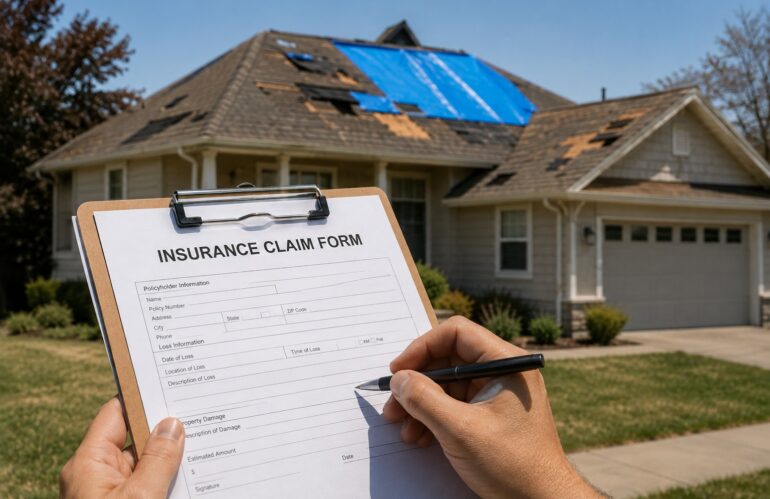
A denial letter is not a final answer, and homeowners routinely treat it like one. If you are searching what to do if insurance denied roof claim, you are probably holding a letter that cites a policy section you have never read, about a roof you can see is damaged. That gap between the letter and reality is usually bridgeable. Denials get reversed with documentation, and there is a clear sequence for producing it. Here is what to do, in order, and where the Utah Insurance Department fits in if the carrier will not move.
QUICK ANSWER
If your roof claim is denied, request the denial in writing with the specific policy language cited, then get an independent inspection to document damage the adjuster may have missed. You can request a re-inspection with a different adjuster, file a supplement with new evidence, or appeal through the Utah Insurance Department.
The five most common denial reasons, and which are contestable
Read your letter for which of these it is. The strategy is different for each, and two of the five are frequently overturned.
- Damage attributed to wear and tear rather than a storm. Highly contestable. This is a judgment call about causation, and a documented independent inspection showing directional impact damage, matching soft metal dents, and a corresponding storm date frequently changes the outcome.
- Damage found to be cosmetic only. Contestable. Bruising that fractures the shingle mat is functional damage even when the roof does not leak yet. Photographs showing exposed mat and soft spots are the evidence that matters.
- Damage below the deductible. Rarely worth contesting on its face, but often worth re-scoping. First scopes commonly omit accessories, steep charges, and code required upgrades. A complete scope sometimes clears a deductible that a partial one did not.
- Late reporting. Difficult, though not always fatal. Utah policies require prompt notice, and carriers apply that strictly. If you can show the damage was not reasonably discoverable earlier, there may be an argument.
- An excluded cause or a policy exclusion. Depends entirely on the language. Common exclusions include manufacturing defect, improper installation, gradual deterioration, and in some policies a separate roof surfacing payment schedule. This is where reading the actual citation matters most.
Step one: get the denial and the policy citation in writing
A phone call is not a denial. Before you do anything else, request a written denial that states the specific reason and quotes the exact policy provision relied on, along with a complete copy of the adjuster’s report and photographs.
- Ask for the full inspection report, not the summary. You are looking for which slopes were walked, where test squares were placed, and what was measured.
- Ask for the photographs. Frequently they show only two slopes, which tells you immediately that the inspection was incomplete.
- Ask for the estimate or scope worksheet. Even on a denial there is usually a scope document showing what was and was not considered.
- Put every request in writing. Email, dated, keeping the thread. This record becomes the backbone of an appeal or a department complaint.
Carriers are generally obligated to explain the basis for a denial. A vague letter with no citation is itself something to push back on.
Step two: get an independent inspection with documentation
This is the step that actually reverses denials. A second set of eyes on the roof, with a camera, produces the evidence the first inspection lacked.
- Every slope walked and photographed. Directional storms damage some faces and not others, and the undamaged faces are often the ones the adjuster inspected.
- Test squares documented with counts. Marked, photographed, and located, so the methodology is reviewable rather than asserted.
- Soft metal evidence. Dented gutters, vent caps, valley metal, fascia, and the AC condenser. This is the strongest available proof that damaging hail actually fell here.
- An itemized replacement scope. Including accessories, steep and complex charges, and code required items that the original scope may have omitted.
- Dated photographs with intact metadata. Keep originals, not screenshots.
Our guide to what hail damage actually looks like on a roof covers the specific evidence that carries weight, and our emergency roof repair team can secure anything actively leaking while the claim is being worked.
Step three: request a re-inspection or file a supplement
With new documentation in hand you have two formal routes, and they are not mutually exclusive.
Re-inspection
Contact the carrier, state that you have obtained an independent inspection that identifies damage not reflected in the original report, and request a re-inspection. Ask specifically for a different adjuster, ideally a senior or field adjuster rather than the original. Provide your documentation in advance and ask that your contractor be present. This alone resolves a meaningful share of disputes.
Supplement
If the claim was partially approved rather than fully denied, a supplement is the right instrument: a documented request to revise the scope, item by item, with photographs and measurements attached. Supplements are routine in the industry and are not adversarial.
In both cases keep the tone factual and evidentiary. You are not arguing that you deserve more. You are showing that the file is incomplete.
Step four: the Utah Insurance Department complaint process
If the carrier will not re-inspect or continues to deny in the face of clear documentation, the Utah Insurance Department accepts consumer complaints and reviews carrier conduct. Filing costs nothing.
- Exhaust the internal appeal first. Document that you requested re-inspection and what the response was. The department will ask.
- Assemble the file. Policy declarations, the written denial with citation, the carrier’s report and photos, your independent inspection and photos, your contractor’s itemized scope, and the full written correspondence thread.
- File the complaint. Submit through the department’s consumer complaint process with a clear, chronological summary and the supporting documents attached.
- Expect the carrier to respond formally. A regulator inquiry produces a written position from the carrier, which frequently prompts a genuine re-review.
The department cannot order a carrier to pay a disputed claim, but it can review whether the claim was handled in accordance with Utah law and the policy, and the process itself changes outcomes more often than homeowners expect.
When to bring in a public adjuster or an attorney
Most residential roof disputes resolve well before this point. Escalate when the numbers justify it.
- A public adjuster is licensed in Utah to represent your interest to the carrier and typically works on a percentage of the recovery. Worth considering on a large loss, a complex policy, or a claim involving interior damage as well as the roof.
- An attorney makes sense when the dispute involves bad faith handling, an unreasonable denial in the face of clear evidence, or a claim large enough that the legal cost is a small fraction of the amount at stake.
- Neither is a first move. Both add cost, and the documentation route resolves the majority of denials without them.
Whatever you decide, do not let the roof sit unrepaired through winter while the claim is argued. Carriers expect you to mitigate further damage, and an unrepaired opening that leads to interior damage can weaken your position rather than strengthen it. Our roof leak repair service exists for exactly this window.
Get a Free Second-Opinion Inspection and Written Documentation
Frequently Asked Questions
Why do insurance companies deny roof claims?
The most common reasons are damage attributed to wear and tear rather than a storm, damage judged cosmetic, a loss below the deductible, late reporting, and a specific policy exclusion. The first two are causation judgments and are the most frequently overturned.
Can I appeal a denied roof insurance claim?
Yes. Request the written denial with the policy citation, obtain an independent documented inspection, request a re-inspection with a different adjuster, and if needed file a complaint with the Utah Insurance Department.
Can I file an insurance claim for a leaking roof?
You can when the leak stems from sudden damage caused by a covered peril such as hail or wind. Leaks caused by age, wear, or deferred maintenance are typically excluded from coverage.
How long do I have to file a roof insurance claim in Utah?
Policies require prompt notice, and most carriers apply a window of one to two years from the date of loss. Waiting also makes causation harder to establish, so report as soon as you suspect storm damage.
Does a second opinion inspection actually change anything?
Frequently. Original inspections often cover only the most accessible slopes and omit accessories or code required items. A documented inspection of every slope, with test squares and soft metal evidence, is what supports a successful re-inspection request.