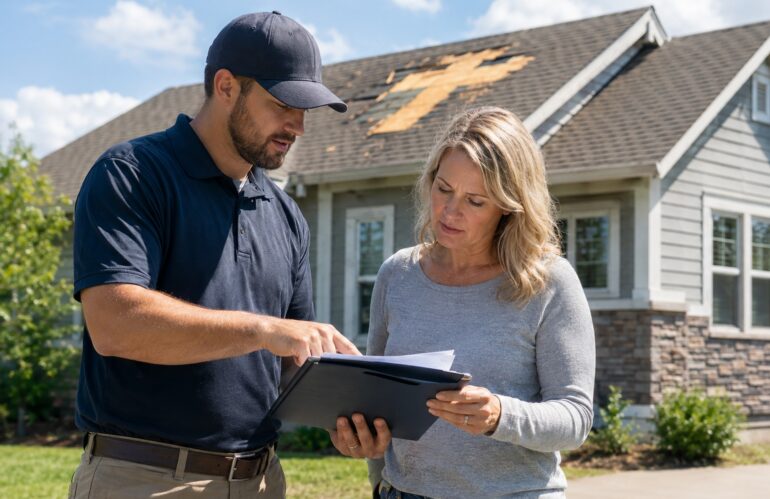
Does a Utah roofer help with insurance claims is a question homeowners usually ask after a hail or wind event, standing in a driveway holding a business card someone just handed them. The answer is yes, within limits that are worth understanding clearly, because the space between what a roofer legally can do and what some companies promise to do is where homeowners get into trouble. Here is the honest version: what a contractor contributes to your claim, what only a licensed adjuster may do in Utah, and how to tell a local company from an out-of-state operation that will not be here next spring.
QUICK ANSWER
A reputable Utah roofing contractor will document damage with photos, provide a detailed repair estimate, and meet your adjuster on site to walk the roof together. They cannot negotiate your claim or act as your adjuster, which requires a public adjuster license in Utah. Avoid any contractor offering to waive your deductible.
What a roofer legally can and cannot do in a Utah claim
Utah, like most states, draws a bright line between contracting and adjusting. A contractor prices and performs work. A public adjuster represents your financial interest to the carrier and must be licensed by the Utah Insurance Department to do so.
What your roofer can do
- Inspect the roof and document damage with dated, labeled photographs.
- Prepare a detailed, itemized repair or replacement estimate using standard industry pricing.
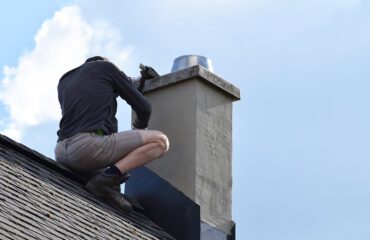
- Meet your adjuster at the property and walk the roof together, pointing out damage.
- Explain what they found and what the repair scope needs to include.
- Submit a supplement request for work the original scope missed, supported by evidence.
- Perform the work once the claim is approved.
What your roofer cannot do
- Negotiate the claim on your behalf or advocate for a settlement amount.
- Interpret your policy language or advise you on coverage.
- File the claim for you or communicate with the carrier as your representative.
- Waive, absorb, discount, or rebate your deductible.
That last item is not a gray area. It is worth its own section.
The adjuster walkthrough, step by step
The single highest value thing a contractor does in a claim is stand on the roof at the same time as the adjuster. Damage that nobody points out is damage that does not get paid for.
- Before the adjuster is scheduled, get an independent inspection. You want your own photo documentation and a written scope in hand first, so you are not seeing your roof for the first time through the carrier’s report.
- Schedule both at once. Ask the carrier for the adjuster’s appointment window and ask your contractor to be there. Most adjusters expect this and many prefer it.
- Walk every slope. Damage is directional. If the adjuster inspects only the two most accessible slopes, the north and east faces may never be evaluated.
- Confirm the test squares. Adjusters typically mark a 10 by 10 foot area on each slope and count impacts inside it. Where those squares are placed materially affects the outcome.
- Cover the accessories. Gutters, downspouts, vent caps, valley metal, fascia wrap, window screens, and the AC condenser fins are all part of the loss and are frequently left out of a first scope.
- Get the scope in writing and read it. Compare it line by line against your contractor’s estimate. Differences are normal. Unexplained omissions are the ones to chase.
Why deductible-waiving offers are insurance fraud
If a contractor offers to cover your deductible, eat it, work it into the price, or give you a rebate that happens to equal it, walk away. This is not aggressive salesmanship. It is the contractor asking you to participate in a false claim, because the carrier is being told you paid a cost you did not pay.
The practical exposure lands on you as well as them. Your claim can be denied, your policy can be cancelled, and you can be named in a fraud action. It also tells you everything about how the rest of the job will be run: a company willing to build a lie into the paperwork on day one is not the company you want on a roof for two days unsupervised.
A related tell is the door-knocked contingency agreement. Signing something on your porch that assigns your claim, commits you to a contractor before you have a scope, or contains a cancellation penalty is how storm season goes wrong. Take the card, take the time, check the company.
Supplements: the part most homeowners never hear about
First adjuster scopes are frequently incomplete, and not usually because anyone is acting in bad faith. An adjuster covering an entire storm region is moving quickly, and some items only become visible during tear-off.
- Hidden decking damage found once the old roof is off.
- Code-required upgrades such as ice and water shield at the eaves or updated ventilation, which many policies cover under ordinance and law provisions.
- Missed accessories like drip edge, valley metal, ridge vent, or pipe boots.
- Steep and complex charges omitted when the roof was scoped from aerial imagery.
- Slopes that were never walked during the original inspection.
A supplement is a documented request to revise the scope, supported by photographs and measurements. Your contractor prepares and submits the evidence; the carrier reevaluates. This is routine and it is one of the strongest reasons to use an experienced local company rather than the cheapest bid.
Actual cash value versus replacement cost value
Two policies can both say your roof is covered and pay wildly different amounts. This is the single most consequential line in your declarations page.
- Replacement cost value. The carrier pays what it costs to put a new roof on today. Typically paid in two parts: an initial actual cash value payment, then the withheld depreciation released once the work is completed and invoiced.
- Actual cash value. The carrier pays the depreciated value of a roof of your roof’s age. On a fifteen year old shingle roof, that can leave a gap of many thousands of dollars that comes out of your pocket.
Find your declarations page and check which one you have before a storm, not after. It is a single line, it is usually abbreviated as RCV or ACV, and it determines whether a covered claim leaves you writing a check for your deductible or for your deductible plus eleven thousand dollars of depreciation.
Also check for a separate wind and hail deductible, which is often a percentage of your dwelling coverage rather than a flat dollar figure, and for any roof surfacing payment schedule endorsement, which converts an RCV policy to depreciated payment on the roof specifically. Our post on homeowners insurance and snow or wind roof damage goes deeper on what is typically covered.
How to tell a storm chaser from a local company
After a significant hail event in Weber or Davis County, out-of-state crews arrive within days. Some are competent. The structural problem is that when your ridge vent leaks in three years, there is no one to call.
- A physical Utah address, not a PO box. Look it up. Drive by it if you want.
- Years of local work you can verify. Ask for addresses in your city from the last two seasons, not stock photos.
- An active Utah contractor license and current insurance certificate naming you as certificate holder.
- A warranty backed by someone who will exist. A workmanship warranty is only as good as the company behind it.
- No pressure to sign on the first visit. Urgency is a sales technique, not a roofing requirement.
- Local references and a real service footprint. You can see ours on the service areas page, and more about the company on our about page.
Schedule a Documented Inspection Before You File
Frequently Asked Questions
Does a roofer deal with the insurance company for me?
A roofer can document damage, provide an itemized estimate, meet your adjuster on site, and submit supplements with supporting evidence. Negotiating your settlement or representing you to the carrier requires a public adjuster license in Utah.
Should my roofer meet the insurance adjuster?
Yes, and it is one of the most useful things they do. Damage that is not pointed out during the inspection often does not make it into the scope, and a contractor on the roof at the same time can ask for slopes and accessories to be evaluated.
Is it illegal for a roofer to waive my deductible?
Yes. It misrepresents your out of pocket cost to the carrier and exposes both of you to claim denial, policy cancellation, and fraud liability. Any offer to cover, absorb, or rebate a deductible is a reason to end the conversation.
How do I get insurance to pay for a roof replacement?
Document the damage promptly with dated photos, report the loss inside your policy window, have an independent inspection done before the adjuster visit, walk the roof together, and supplement with evidence for anything the first scope missed.
Does homeowners insurance cover roof leaks?
Generally yes when the leak results from sudden damage caused by a covered peril such as wind or hail. Leaks caused by age, wear, or deferred maintenance are typically excluded, which is why reporting storm damage early matters.