
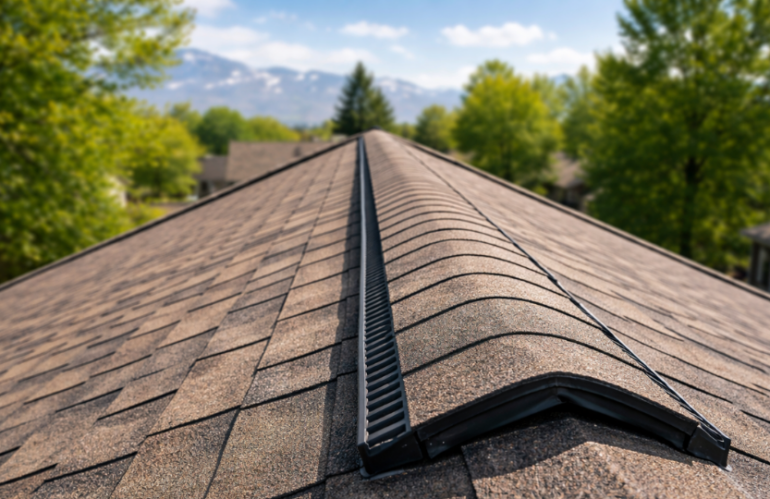
A roof exhaust vent is one of the most important yet overlooked components of a roofing system. While shingles and flashing often receive the most attention, ventilation plays a critical role in protecting your home from heat buildup, moisture damage, and premature roof wear.
In Utah’s climate, where hot summers and cold, snowy winters place added stress on roofing systems, proper ventilation becomes even more essential. Without balanced airflow, your attic can trap heat and moisture that slowly compromise both structural integrity and roofing materials.
In this guide, we’ll explain how roof exhaust vents work, common ventilation issues, and when professional upgrades may be needed.
What Is a Roof Exhaust Vent and How Does It Work?
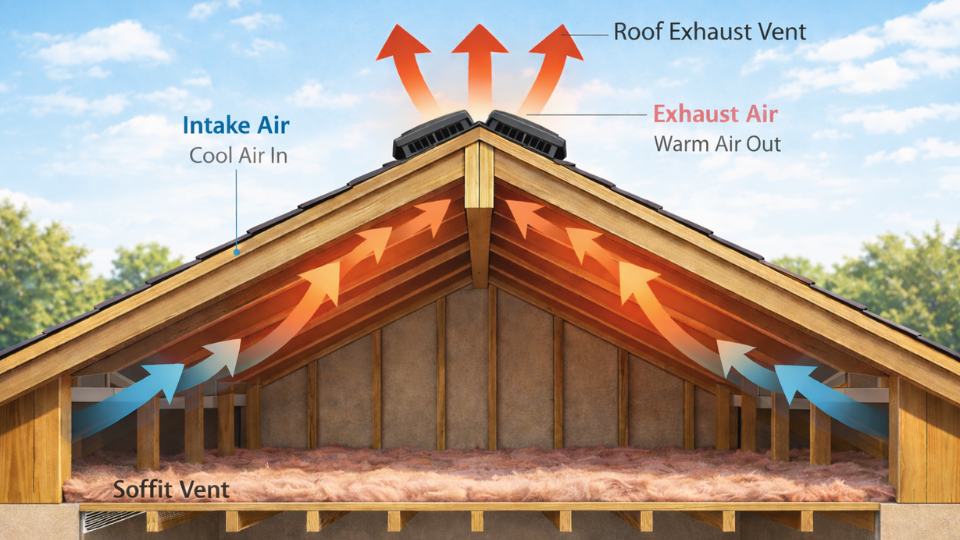
A roof exhaust vent allows warm, moist air to escape from the attic. It works as part of a balanced ventilation system that includes intake vents (typically located along soffits) and exhaust openings positioned higher on the roof.
Because warm air naturally rises, the system pulls cooler air in from lower intake vents while pushing heated air out through the exhaust. This continuous airflow helps regulate attic temperature and moisture levels.
Common exhaust systems include ridge vents, box vents, turbine vents, and powered attic fans. Each option serves the same purpose: preventing trapped air from damaging the roofing structure.
Understanding a Roof Ventilation Problem
When airflow is restricted or unbalanced, attics can become extremely hot during summer and excessively humid during winter.
In hot weather, attic temperatures can exceed 130°F, accelerating shingle deterioration and increasing cooling costs. During winter, warm air rising from living spaces can condense against cold surfaces, leading to mold growth or wood rot.
In regions like Utah, dramatic seasonal temperature shifts intensify these risks. Snow accumulation combined with trapped attic heat can contribute to ice dam formation along the roofline.
Signs of Poor Attic Ventilation
Homeowners may notice warning indicators before serious damage occurs. Common symptoms include:
- Higher-than-normal cooling bills
- Musty odors in the attic
- Visible condensation on rafters
- Peeling paint near roof edges
- Shingles aging prematurely
These issues often signal trapped heat or moisture that can shorten the lifespan of your roofing system.
How a Vent on Roof Protects Your Roofing System
Proper exhaust components installed along the roofline help extend shingle life, reduce structural stress, and maintain insulation performance. By keeping attic temperatures stable, ventilation prevents materials from warping or deteriorating due to excessive heat.
Balanced airflow also reduces strain on HVAC systems by minimizing temperature differences between living spaces and the attic.
Whether your home has asphalt shingles or metal roofing, airflow supports long-term durability. Understanding material performance, such as the differences outlined in metal vs. shingle roofing, helps homeowners see how ventilation complements roofing materials.
How Many Roof Vents Should I Have?
The correct number depends on attic size, insulation levels, and building code recommendations. A common guideline is one square foot of ventilation for every 150 square feet of attic space, though some homes qualify for a 1:300 ratio when balanced intake and exhaust systems are properly installed.
Distribution is just as important as total vent area. Too much exhaust without sufficient intake can disrupt airflow, while inadequate exhaust can trap heat and moisture. Professional evaluation ensures the system is balanced correctly.
How to Roof Vent Properly
Proper ventilation design involves more than cutting openings into roofing materials. Placement, intake-to-exhaust ratios, and weatherproof installation all influence effectiveness.
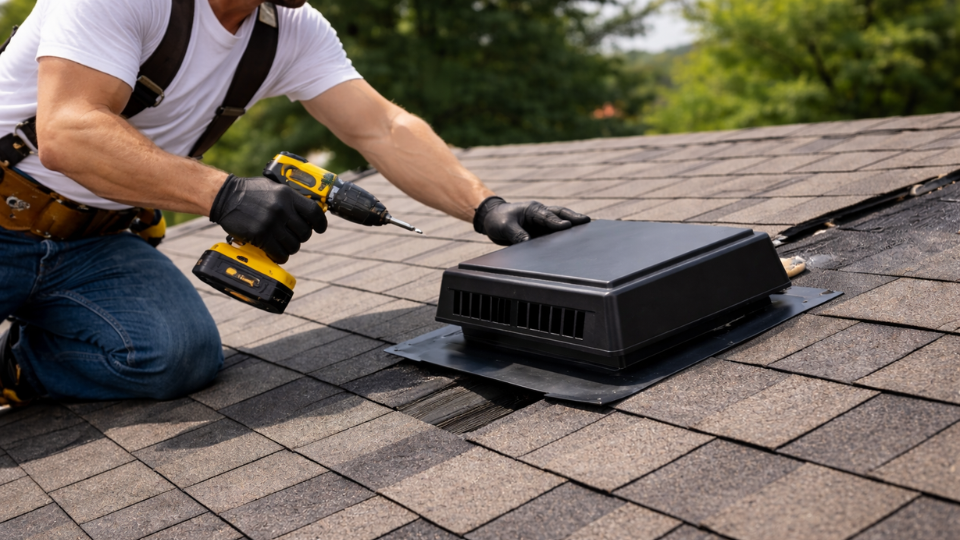
Incorrect installation can lead to leaks, uneven airflow, or reduced performance. During roof replacement or upgrades, ventilation should always be evaluated alongside structural components. Professional services like roof installation and repair help ensure airflow systems are properly integrated into the overall roofing structure.
When Professional Ventilation Upgrades Are Necessary
Ventilation improvements may be recommended in situations such as:
- During a full roof replacement
- After significant storm damage
- When adding or upgrading attic insulation
- If finishing or converting attic space
- When persistent moisture issues occur
- If ice dams form repeatedly during winter
During winter months, inadequate airflow can increase the risk of ice dams and moisture-related damage. Correcting ventilation early helps reduce long-term structural risks.
Protecting Your Home with Proper Roof Ventilation
A well-designed roof exhaust vent system protects your home year-round by regulating heat, reducing moisture buildup, and extending the life of your roofing materials. Ventilation is not just an accessory; it is a critical part of a healthy roofing system.
If you’re unsure whether your attic airflow is properly balanced, Elite Services & Roofing helps homeowners across Utah ensure their roofs are protected every season. Scheduling a professional evaluation can identify hidden ventilation issues before they lead to damage. To learn more or book an inspection, you can contact Elite Services & Roofing to book an appointment.