
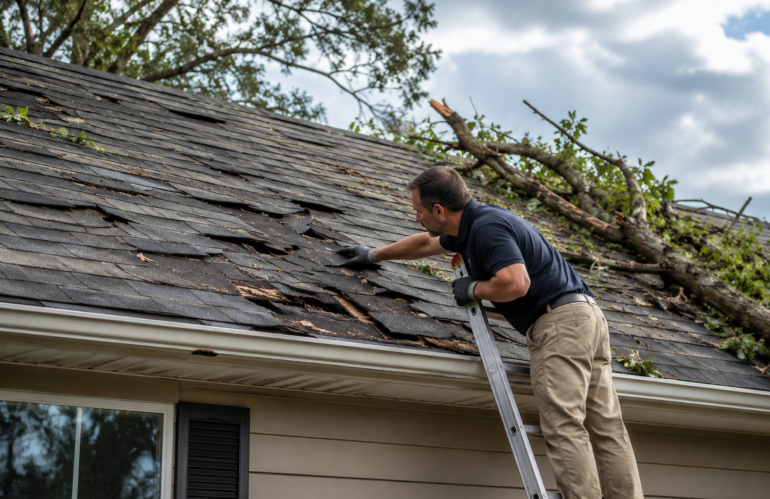
A summer hailstorm rolls through Ogden in 20 minutes and leaves nothing visible from the street. But up on the roof, the damage is already done: dimpled shingles, bruised underlayment, and granules washing into gutters with the next rain. Storm damage roof repair is one of those problems that punishes homeowners for waiting. The ones who act fast protect their warranties, file stronger insurance claims, and avoid the $500 patch that becomes a $10,000 mold remediation. Here is exactly what to look for, when to call a professional, and how to handle the aftermath.
What are the signs of storm damage to a roof?
Key signs include missing or cracked shingles, hail dents on flashing and gutters, lifted shingle edges, granule loss in downspouts, and dark staining or water marks on interior ceilings. Hail damage to asphalt shingles typically appears as circular bruising that exposes the black fiberglass mat beneath the granule layer.
The Most Common Signs of Storm Damage on a Roof
Hail Damage
Hail causes billions of dollars in roofing claims each year across the United States. On asphalt shingles, look for circular dents roughly the size of the hailstones that struck the surface. These bruises feel soft when pressed and expose black fiberglass mat beneath the granule layer. Metal components (gutters, flashing, vents, and AC fins) will show clear denting. Check your downspout after a hailstorm for an unusual accumulation of granules; significant granule loss accelerates shingle aging and voids most manufacturer warranties.
Not every hail event warrants a full replacement. Quarter-size hail striking at high velocity can devastate a 15-year-old roof while leaving a new impact-resistant roof nearly unscathed. A professional storm damage roof inspection is the only reliable way to assess actual damage severity and determine whether repair or replacement makes sense for your specific situation.
Wind Damage
Wind lifts shingles from the edges and rakes, loosening the sealant bond between tabs. Signs include shingles that are completely missing, curling or cupped edges, and cracked shingles where wind stress fractured the tab. Check your yard and gutters for shingle debris after any significant storm. One or two missing shingles on an otherwise sound roof can often be repaired; a ridge line with multiple lifted sections usually points to more widespread sealant failure.
Worth knowing for Northern Utah homeowners: sustained winds above 50 mph can compromise standard 3-tab shingles, while architectural (dimensional) shingles offer better resistance, typically rated to 110 mph or higher depending on the manufacturer. Our blog on wind damage to a roof covers these failure patterns in detail.
Why a Professional Roof Inspection Matters After a Storm
Insurance adjusters are trained to identify damage, but they are not there to advocate for you. A professional storm damage roof inspection gives you an independent assessment before an adjuster walks your property, which puts you in a much stronger position when filing a claim. Most reputable roofing contractors offer post-storm inspections at no charge.
Here is what a professional inspection catches that a homeowner walk-around misses: the condition of the underlayment beneath the shingles, integrity of the flashing around chimneys and skylights, ridge cap alignment, and signs of interior moisture intrusion that have not yet appeared as visible ceiling stains. Flashing failure is one of the most frequently missed storm-related issues and one of the costliest if left untreated. Elite Services & Roofing provides thorough post-storm inspections for Ogden and Northern Utah homeowners, documenting damage in detail to support your insurance claim.
Repair or Replace: What Storm Damage Actually Calls For
Not every storm calls for a full replacement. A repair is appropriate when damage is localized to one section (a few missing shingles, a failed flashing joint) and the rest of the roof is in solid condition. Replacement becomes the right call when damage is widespread, when the roof is already near the end of its lifespan, or when the damage has compromised the structural integrity of the decking beneath.
A widely used benchmark: if more than 25 to 30 percent of the roof surface is damaged, replacement is almost always more cost-effective than patching across a degraded surface. Many insurance policies will cover full replacement when the damage threshold is met. Understanding how often roofs should be replaced before your inspection helps you have a more informed conversation with both your contractor and your adjuster.
How to Protect Your Roof from Future Storm Damage
The best storm damage roof repair is the one you never need. A few preventive steps worth taking before the next storm season:
- Upgrade to impact-resistant shingles (Class 4 rating). Many Utah insurers offer premium discounts of 20 to 30 percent for this upgrade, which can offset the higher upfront material cost over time.
- Keep trees trimmed at least 10 feet back from the roofline to reduce branch impact risk and debris accumulation after storms.
- Inspect and reseal flashing annually, particularly around chimneys, vents, and pipe penetrations, where failures typically begin.
- Clean gutters twice a year to prevent ice damming and water backup under shingles during freeze-thaw cycles.
- Schedule a professional inspection every two to three years, not only after storms, to catch early-stage deterioration.
Storm damage rewards homeowners who move quickly. Getting an inspection within days of a major storm, before secondary damage develops and while insurance documentation timelines are fresh, is the single most important step you can take. If you suspect your roof took a hit, request a free quote from Elite Services & Roofing. A thorough inspection now is far less expensive than the damage that develops when you wait.
Frequently Asked Questions
How soon after a storm should I get my roof inspected?
Within 24 to 72 hours if possible. Many insurance policies require you to document damage promptly and take reasonable steps to prevent further damage. Delaying the inspection can complicate your claim and leave your home exposed to additional water intrusion from the next rain event.
Does homeowners insurance cover storm damage roof repair?
Most standard homeowners policies cover sudden storm damage from hail and wind. Your deductible applies, and coverage typically excludes damage from gradual wear or maintenance neglect. Document everything before your adjuster visit, including photographs of interior staining, damaged gutters, and shingle debris in your yard.